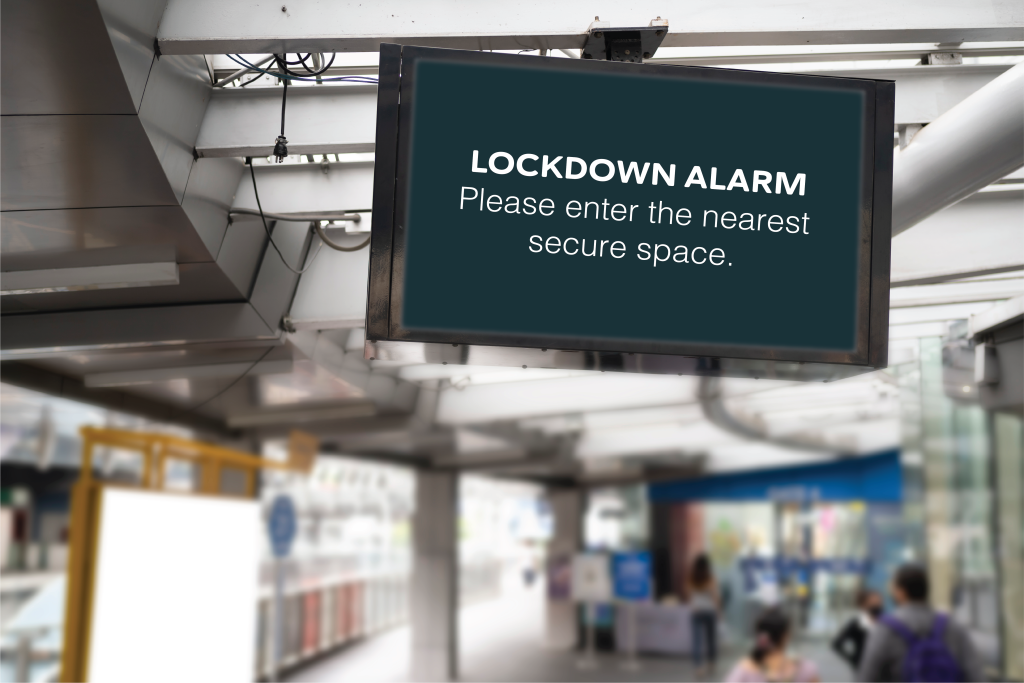
Martyn's Law
Martyn’s Law, the Terrorism (Protection of Premises) Act 2025, requires qualifying premises to plan how they would respond to a terrorist attack. Duties are expected to apply from spring 2027. PopAlert helps organisations deliver one of the key parts: calm, immediate on-screen instructions when it matters most.
Martyn’s Law is UK legislation designed to improve protective security and emergency preparedness in publicly accessible locations. It encourages organisations to take proportionate steps to reduce risk and respond effectively to serious incidents, including acts of terrorism.
Rather than prescribing specific products, Martyn’s Law focuses on outcomes — ensuring people know what to do and receive clear guidance during an emergency.
The Act received Royal Assent on 3 April 2025. Statutory guidance was published in April 2026, and the duties are expected to come into force in spring 2027, regulated by the Security Industry Authority (SIA).
Understanding
Martyn’s Law
Who Martyn’s Law Applies To
Martyn’s Law applies to publicly accessible premises used for purposes such as education, healthcare, retail, hospitality, entertainment, sport, places of worship, transport and public services, where 200 or more people can reasonably be expected at the same time, staff included. Private offices that aren’t open to the public are generally not covered. Examples include:
Schools, colleges, and universities
Shops, hotels and hospitality
Public venues and event spaces
Public authority buildings open to the public
Healthcare and leisure facilities
Transport hubs and stations
Standard Tier and Enhanced Tier
What you need to do depends on how many people can reasonably be expected on site at the same time.
Standard tier: 200–799 people
- Notify the SIA about your premises.
- Have procedures for evacuation, invacuation, lockdown and communication.
- Make sure staff understand them.
No requirement to install physical security. Schools, colleges and places of worship are always in this tier, whatever their size.
Enhanced tier: 800+ people
- Everything in the standard tier.
- Public protection measures to reduce vulnerability and the risk of harm, such as monitoring, managing the movement of people, physical safety and information security.
- A documented assessment provided to the SIA, and a designated senior individual where the responsible person is an organisation.
Identify Responsibility
Confirm whether you are responsible for a qualifying public venue or event
Assess Risk
Conduct a terrorism risk assessment relevant to your premises and activities.
Put Proportionate Measures in Place
Implement appropriate security measures proportionate to your risk level.
Prepare Emergency Procedures
Create clear emergency response plans and evacuation procedures.
Train Staff
Ensure staff are trained to respond effectively in an emergency situation.
Review and Maintain
Regularly review procedures and update them as risks or guidance change.
What Martyn’s Law Expects
- 1 Identify Responsibility
- 2 Assess Terrorism Risk
- 3 Put Proportionate Measures in Place
- 4 Prepare Emergency Procedures
- 5 Train Staff
- 6 Review and Maintain
Where Many Organisations Fall Short
Many emergency plans rely on methods that are difficult to use during high-stress situations, such as emails, phone trees, or messaging apps. These methods can be missed, delayed, or inconsistently delivered.
Martyn’s Law places emphasis on what works in practice — not just what exists on paper.
What is PopAlert?
PopAlert is a local emergency alert system that displays full-screen instructions across connected devices. It allows alerts to be activated on-site and helps ensure staff and occupants receive clear, immediate guidance during serious incidents.
Every qualifying premises needs a procedure for communicating with people on site during an incident. PopAlert is a practical way to deliver it. No single product makes a site compliant, and the SIA doesn’t endorse products, but a clear, tested way of telling everyone what to do is central to the procedures you need.
How PopAlert Supports Your Procedures
Instant Alerts
Alerts are triggered instantly and displayed full-screen across connected computers
Clear On-Screen Instructions
Instructions such as lockdown, evacuation, or invacuation are shown clearly and consistently
Recognisable Alert Signals
Distinct visual and audible cues help staff quickly recognise an emergency situation
On-Site Control Unit
A dedicated control unit allows alerts to be activated locally when needed
Designed With Schools in Mind
PopAlert is built to be calm, clear, and age-appropriate. Schools can use simple, predefined wording that aligns with safeguarding and lockdown guidance, without relying on staff to manually compose messages under pressure.
The system supports consistency, reassurance, and clarity — key factors for protecting pupils and staff.
Suitable for Corporate and Office Environments
In offices and shared workplaces, PopAlert ensures everyone receives the same instruction at the same time, regardless of department or location.
This supports business continuity, duty of care, and health & safety responsibilities in larger or multi-site organisations.
Private offices that aren’t open to the public are usually outside Martyn’s Law, but shared office buildings often contain spaces that are covered, such as event venues, cafés and gyms. Martyn’s Law and shared offices →
Supporting Inspections and Audits
PopAlert helps organisations demonstrate that emergency communication is practical, repeatable, and aligned with documented procedures.
This can support discussions with:
- Governors and trustees
- Health & safety auditors
- Local authorities
- Insurers
Martyn’s Law Guides
Plain-English guides for schools, healthcare, shared offices and public venues.