Healthcare is one of the uses listed in Martyn’s Law. The statutory guidance published in April 2026 confirms that this includes hospitals, primary care clinics and doctor and dentist surgeries. Unlike schools and places of worship, healthcare premises get no special treatment, so a large hospital can fall into the more demanding enhanced tier.
Here is what the Terrorism (Protection of Premises) Act 2025 means for healthcare settings ahead of the duties coming into force, expected in spring 2027.
Which Healthcare Premises Are in Scope?
A healthcare building is in scope if it is publicly accessible and it is reasonable to expect 200 or more people to be present at the same time. The count must include staff, which the guidance defines as everyone working there, including employees, contractors and volunteers.
- 200–799 people: standard tier. Many larger GP practices, health centres, clinics and community hospitals.
- 800 or more people: enhanced tier. Most acute hospitals, once patients, visitors and staff on a busy shift are counted.
What the Standard Tier Requires
The responsible person must notify the Security Industry Authority (SIA) and have reasonably practicable procedures for evacuation, invacuation, lockdown and communication, and make sure staff understand them.
What the Enhanced Tier Adds for Large Hospitals
Enhanced tier premises must also:
- put in place public protection measures that reduce vulnerability to an act of terrorism and the risk of physical harm, such as measures covering monitoring, the movement of people, physical safety and the security of information;
- document their procedures and measures and provide this to the SIA;
- where the responsible person is an organisation, such as an NHS trust or private provider, designate a senior individual responsible for compliance.
Penalties for enhanced tier premises can reach £18 million or 5% of worldwide revenue, whichever is greater. See our standard vs enhanced tier guide.
Why Healthcare Is Different
Hospitals face challenges that most other premises don’t:
- Many patients can’t simply leave. People in theatres, intensive care or on wards may not be able to move, so lockdown and invacuation often matter more than evacuation.
- They never close. Procedures must work at 3am with night staffing as well as in a busy outpatient clinic.
- Large, open sites with many entrances, car parks and public routes, plus emergency departments where tensions can run high.
- A mix of people: patients, visitors, contractors, students and staff on rotation, many of whom won’t know the building well.
Building on Existing Emergency Planning
NHS organisations already have emergency preparedness, resilience and response (EPRR) arrangements, including lockdown plans. Martyn’s Law doesn’t replace these. Many trusts will find the work is about checking that existing plans cover terrorism scenarios, that lockdown and invacuation are clearly defined, and that communication reaches every ward and department, then documenting the evidence.
The Communication Gap in Hospitals
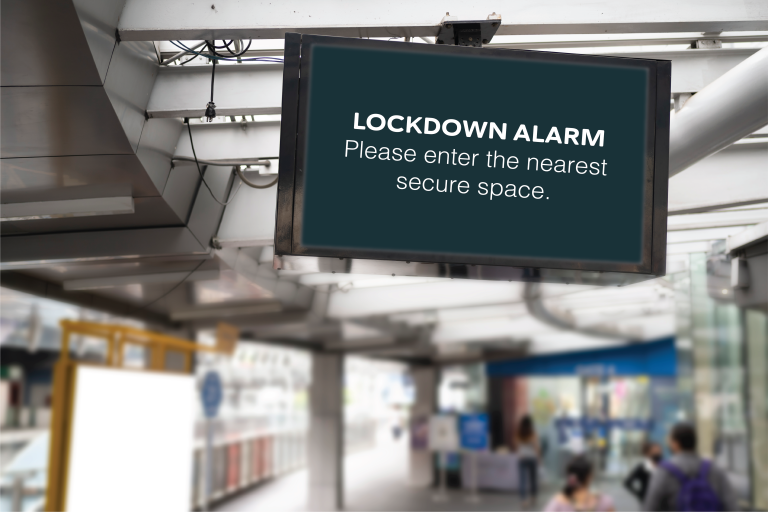
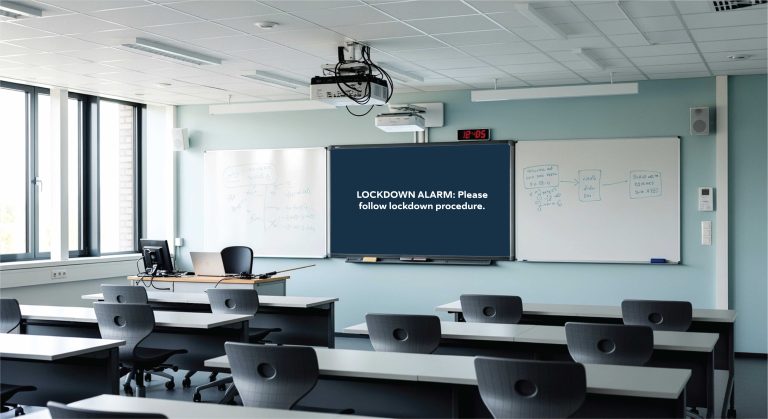
Overhead announcements can be disturbing for patients, are easy to miss in clinical areas, and can’t give detailed instructions. Pagers and bleeps reach only some staff. Emails go unread in an emergency. A good communication procedure gets a clear, consistent instruction to staff in every area at the same time, ideally without alarming patients unnecessarily, and allows updates as the situation changes.
How PopAlert Supports Healthcare Settings
PopAlert delivers pre-written lockdown, invacuation, evacuation and All Clear instructions full screen on every connected computer, at nurses’ stations, reception desks and offices, at the same moment. Role-based access controls who can trigger alerts, administrators can send live updates, and audible tones can be configured per alert type. It runs on your local network and works alongside existing alarm and access control systems.
Learn more about PopAlert for healthcare or book a demo.
This article is general information, not legal advice. Check the latest Home Office and SIA guidance for your premises.