Martyn’s Law, formally the Terrorism (Protection of Premises) Act 2025, requires qualifying premises to have four kinds of public protection procedure: evacuation, invacuation, lockdown and communication. The first three are about where people go. Communication is about how they find out, and every other procedure depends on it.
This guide explains what the Act and the Home Office guidance say about communication, and how venues can build a procedure that works on a busy day. The duties are expected to come into force in spring 2027, regulated by the Security Industry Authority (SIA).
What the Act Actually Says
Section 5 of the Act defines public protection procedures as procedures to be followed by people working on the premises if there is reason to suspect an act of terrorism is occurring, or is about to occur, on or near the premises. One of the four is a procedure “for providing information to individuals on the premises or at the event”.
The Home Office standard duty factsheet describes communication as the process of ensuring information is provided to people at the premises, “for example, alerting people to danger as quickly as possible and providing instructions to remain in place or move away, where it is safe to do so.”
So a communication procedure has two jobs: raise the alert fast, and tell people what to do.
Who Has to Have One
Both tiers need public protection procedures, including communication. That means publicly accessible premises with a Schedule 1 use, such as entertainment and leisure venues, venues for hire, conference centres, sports grounds, shops, food and drink, hotels and places of worship, where it is reasonable to expect 200 or more people at the same time. Standard tier covers 200–799 people; enhanced tier is 800 and above. See standard vs enhanced tier to check which applies to you.
Proportionate, Not Sophisticated
The duty is to have procedures that are reasonably practicable for your premises. The Home Office’s own examples are deliberately modest:
- For a small shop, communication is met by setting out the procedures in a one-page summary and circulating it to the people who work there.
- For a restaurant, it is met by making sure staff know who will enact the procedures (the shift manager) and planning how to communicate with customers if an attack occurred.
A larger venue with several floors, function rooms, back-of-house areas and hundreds of visitors will need more than that, because word of mouth won’t reach everyone in time. The question to ask is: if something happened right now, how long would it take for every member of staff in every area to know, and to know what to do?
The Two Parts of a Communication Procedure
1. Communicating the procedures in advance. The factsheet says procedures should be communicated to everyone who needs to know them, which may include employees, volunteers, contractors and people hiring the premises. Briefings at induction, short refresher sessions and a summary in staff areas all count.
2. Communicating during an incident. This is the live part:
- Who can raise the alert, and how. Decide whether any member of staff can trigger it, or only nominated people.
- How staff are alerted in every area: front of house, kitchens, offices, plant rooms, function suites.
- What the instruction is: evacuate, invacuate or lock down. Pre-agreed, plain wording avoids hesitation.
- How visitors are told. Staff usually pass instructions to the public, so staff need the message first.
- How updates are sent as the situation changes, and how the All Clear is given.
- Who calls the emergency services and passes on information.
Where Venue Communication Usually Breaks Down
- Noise. Music, crowds and kitchens drown out PA announcements and radios.
- Ambiguity. A bell or siren tells people something is wrong but not what to do, and can be mistaken for the fire alarm. Running towards the exits is the wrong response in a lockdown. See lockdown alarm vs fire alarm.
- Back-of-house gaps. Staff in offices, stores and plant rooms are often the last to hear.
- Phones. Messages to personal phones can go unread for minutes while staff are working.
- Inconsistent messages. Instructions passed person to person change as they travel.
Practical Ways to Meet the Communication Procedure
Most venues will use a combination of methods. Common options include:
- Code words over radio or PA that staff recognise but visitors won’t find alarming.
- Dedicated lockdown alarms with a tone distinct from the fire alarm.
- Staff radios for supervisors and security.
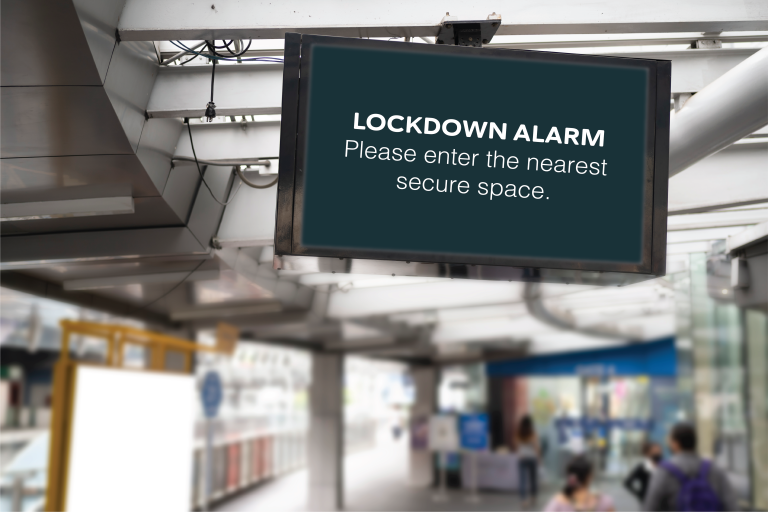
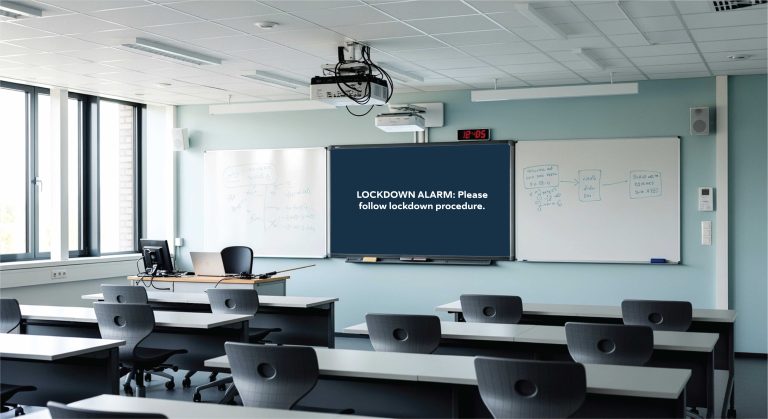
- On-screen alerts on staff computers, tills and digital signage, giving the written instruction.
- Messaging apps or SMS for staff who are off site or need follow-up information.
For a side-by-side look at these options, see our lockdown alert system comparison.
Write It Down and Test It
Standard tier premises don’t have to submit documents to the SIA, but writing the procedure down makes it easier to brief staff and to show what you have in place. Keep it short: triggers, who raises the alert, the exact messages, how updates and the All Clear are given, and who contacts the emergency services. Then test it. A short drill quickly shows which areas didn’t get the message. Our guide to running a lockdown drill is written for schools, but the steps work for any venue.
How PopAlert Supports the Communication Procedure
PopAlert is one practical way to deliver the communication part of your procedures. When an alert is triggered, a full-screen message appears on every connected computer and screen at once, with the instruction written out, so staff know whether to evacuate, invacuate or lock down. Users can’t dismiss the alert; only an authorised reset removes it. You can choose a distinct tone from 32 built-in sirens, send live updates as the situation changes, and give a clear All Clear.
No product makes premises “Martyn’s Law compliant”, and the SIA doesn’t endorse any. What matters is a procedure that suits your venue and that staff understand. See PopAlert for public venues, read our Martyn’s Law overview, or book a demo.
This article is general information, not legal advice.