Martyn’s Law, formally the Terrorism (Protection of Premises) Act 2025, received Royal Assent on 3 April 2025. In April 2026 the Home Office published the statutory guidance that explains how the law will work in practice, and the duties are expected to come into force in spring 2027.
For school leaders, governors and trust boards, the guidance answers the questions that matter most: does the law apply to us, who is responsible, and what exactly do we need to have in place? This article walks through each one in plain English.
Key Dates at a Glance
- 3 April 2025: the Act received Royal Assent.
- April 2026: statutory guidance published.
- Spring 2027 (expected): the duties come into force after an implementation period of at least 24 months. The Security Industry Authority (SIA) becomes the regulator.
- Within three months of commencement: qualifying premises must notify the SIA through its online portal.
That leaves schools roughly two terms to get their procedures documented, understood and tested.
Does Martyn’s Law Apply to Your School?
A school is in scope if 200 or more people can reasonably be expected to be present at the same time. That figure counts everyone on site, including pupils, staff and visitors, not just the number on roll.
Schools are treated differently from other premises in one important way: early years, primary, secondary and further education settings always fall into the standard tier, even if more than 800 people are on site. The more demanding enhanced tier, which applies to large venues such as stadiums and arenas, does not apply to schools.
Settings below the 200 threshold are outside the Act. However, the Department for Education’s Protective security and preparedness for education settings guidance still applies to all schools, and it recommends the same kind of planning.
Who Is the Responsible Person?
Every qualifying school needs a responsible person who carries the legal duty.
- Maintained schools: the governing body.
- Academies: the academy trust board, across all of its sites. Multi-academy trusts cannot pass the legal responsibility down to local governing bodies, although day-to-day work can be delegated to a CEO, headteacher or senior leader.
If your premises are let to other organisations out of hours, review your lettings agreements so it is clear who is responsible during those events.
What Standard Tier Schools Must Do
The standard tier duties are deliberately simple and low cost. A qualifying school must:
- Notify the SIA that it is a qualifying premises.
- Have public protection procedures that are reasonably practicable, covering four areas:
- Evacuation: moving people out of the building safely.
- Invacuation: bringing people inside to a safe place.
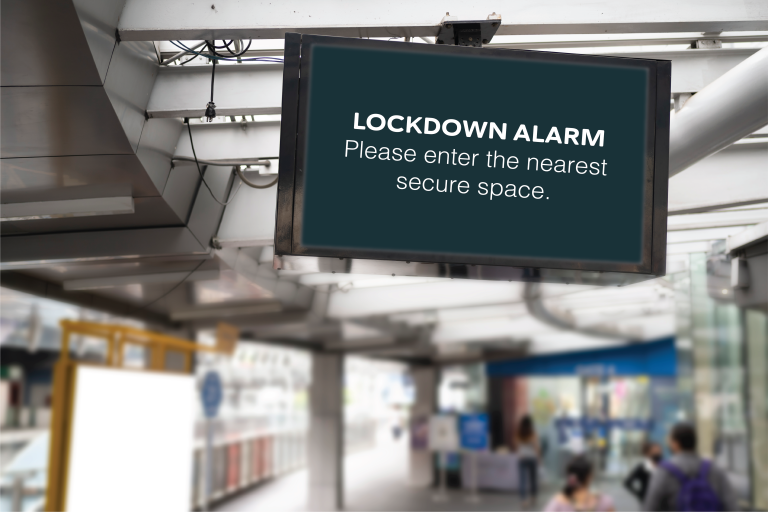
- Lockdown: securing the premises to stop an attacker getting in.
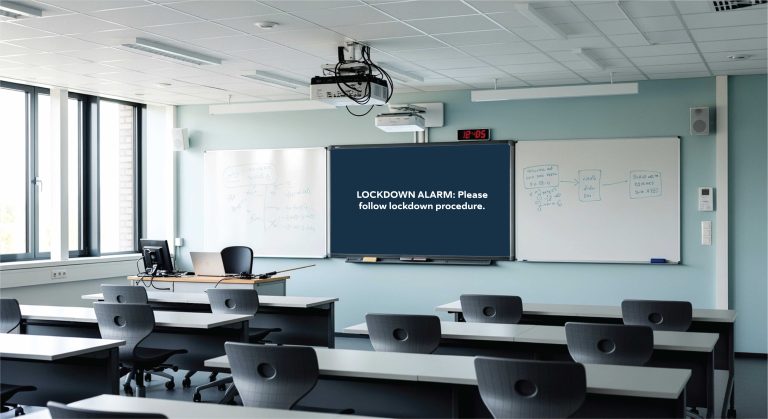
- Communication: alerting people on site and telling them what to do.
- Make sure staff know the procedures and their role in them, with proportionate, realistic training.
If you are unsure how lockdown and invacuation differ, our guide to lockdown vs invacuation explains both.
What the Guidance Does Not Require
It is just as important to know what is not required. The guidance is clear that standard tier schools do not have to install new physical security such as CCTV, scanners, barriers or extra gates, hire security staff, or appoint external consultants.
The SIA, Home Office and Department for Education also do not endorse any product as making a school compliant. Be cautious of anyone who claims otherwise. For most schools, Martyn’s Law means formalising and evidencing what they already do well.
The Communication Procedure: The Part Schools Most Often Underestimate
Most schools already practise evacuation through fire drills. Lockdown and invacuation are less familiar, and the communication element is where plans most often fall down. Ask yourself:
- How would every classroom, office, hall and outbuilding receive the same instruction within seconds?
- Is the lockdown signal clearly different from the fire alarm, so nobody evacuates into danger?
- How would you reach staff and pupils in corridors, toilets, the library or the playground?
- How would you send updates while the incident develops, and how is the All Clear confirmed?
- Does it still work if a member of staff has to raise the alert quietly?
Bells, tannoys, emails, phone trees and messaging apps each have gaps: they can be misheard, unread or slow. Whatever method you choose, write it into your procedure and test it.
Penalties for Non-Compliance
The SIA will be able to issue penalties. For standard tier premises the maximum is £10,000, plus up to £500 per day for continued non-compliance. The intention is to encourage compliance rather than punish, but trust boards and governors will want to show they have acted.
A Practical Checklist for the Next Six Months
- Confirm whether your school, or each school in your trust, reaches the 200-person threshold.
- Confirm who the responsible person is and who will lead the work day to day.
- Review your existing evacuation, invacuation and lockdown procedures against the guidance.
- Decide how alerts and updates will be communicated to every part of the site, and write it down.
- Train staff so they know the signals, their role and how the All Clear works.
- Run a drill, then review what worked and what didn’t.
- Check lettings agreements for out-of-hours use.
- Prepare to notify the SIA once the portal opens.
Free resources are available from ProtectUK and the National Protective Security Authority (NPSA), and the DfE’s protective security guidance is a useful companion to the statutory guidance.
How PopAlert Supports the Communication Procedure
PopAlert is one way to deliver the communication part of your procedures. Authorised staff trigger a pre-written lockdown, evacuation, invacuation or All Clear alert, and it appears full screen on every connected computer across the school at the same time, with a distinct alert tone that can’t be confused with the fire alarm. Administrators can send live updates as the situation changes, and drill mode lets you practise without disruption.
Find out more about PopAlert for schools, read our overview of Martyn’s Law, or book a demo to see it working.
This article is general information, not legal advice. Always check the latest Home Office and SIA guidance for your setting.