London has one of the largest flexible office markets in the world, from co-working floors and serviced offices to multi-tenant towers with shared lobbies, cafés and event spaces. Operators and landlords keep asking the same question: does Martyn’s Law apply to us?
The honest answer is: an office on its own usually isn’t covered, but many shared office buildings contain spaces that are. This guide explains why, based on the statutory guidance published in April 2026.
Why Offices Alone Are Usually Out of Scope
Martyn’s Law (the Terrorism (Protection of Premises) Act 2025) applies to premises that are wholly or mainly used for one of the uses listed in Schedule 1 of the Act, are publicly accessible, and can reasonably expect 200 or more people at once. Offices are not one of those listed uses. A private office floor used only by a company’s own staff is therefore generally outside the Act.
Where Shared Office Buildings Come into Scope
Modern workspaces are rarely just desks. Schedule 1 does include:
- venues for hire, conference centres and exhibition halls, such as bookable event spaces, auditoriums and meeting suites hired out for public events;
- food and drink, such as ground-floor cafés, bars and restaurants open to the public;
- shops and retail units;
- entertainment and leisure, such as gyms and fitness studios open to members of the public.
The guidance also makes clear that limiting entry to members, pass-holders or paying customers does not stop a space counting as publicly accessible. A co-working events space that sells tickets to talks, or a members’ café, can still be publicly accessible.
Premises Within Premises
Where smaller qualifying spaces sit inside a larger building, the guidance treats each of them as qualifying premises in their own right in addition to the larger building, much like shops in a shopping centre. If a building has several uses, you look at its principal use, meaning the one it is used for most of the time.
In practice, a single London office building could contain a qualifying café run by one operator and a qualifying events venue run by another, plus office floors that are out of scope, all sharing the same lobby, lifts and exits.
Who Is Responsible in a Multi-Tenant Building?
The responsible person is whoever controls the qualifying premises for its Schedule 1 use. That could be the flexible workspace operator, the café or venue operator, or the landlord, depending on who runs what.
Where there is more than one responsible person, the Act requires them to co-ordinate with each other, so far as reasonably practicable. Shared lobbies, atria, lifts and exits mean one occupier’s lockdown or evacuation affects everyone else in the building.
How to Work Out Where You Stand
- Map every space in the building and what it is used for: offices, café, event space, gym, retail.
- Check which uses appear in Schedule 1 and whether the public, including members and ticket-holders, can access them.
- Estimate the most people reasonably expected in each qualifying space at once, including staff. Events can push numbers well above the everyday figure.
- Identify the responsible person for each qualifying space.
- Agree co-ordination between landlord, operator and tenants for shared areas and building-wide alerts.
What In-Scope Spaces Will Need
Most spaces inside an office building will fall into the standard tier (200–799 people), which means notifying the SIA and having procedures for evacuation, invacuation, lockdown and communication that staff understand. Large venues expecting 800 or more people fall into the enhanced tier, with extra duties. Our guide to standard vs enhanced tier explains the difference.
Even If You’re Out of Scope, Tenants Will Ask
Corporate occupiers increasingly ask landlords and workspace providers how they would be warned during a security incident. Having a clear building-wide plan for lockdown, invacuation and evacuation is good practice under your existing health and safety duties, and a selling point for members and tenants.
Building-Wide Communication with PopAlert
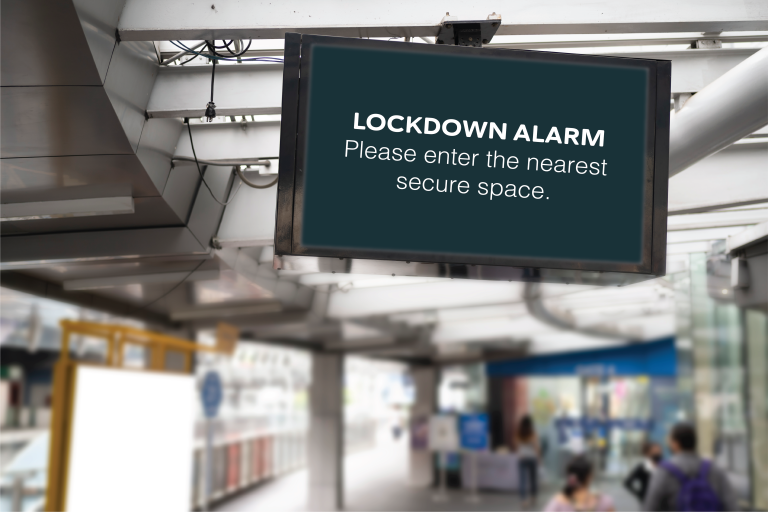
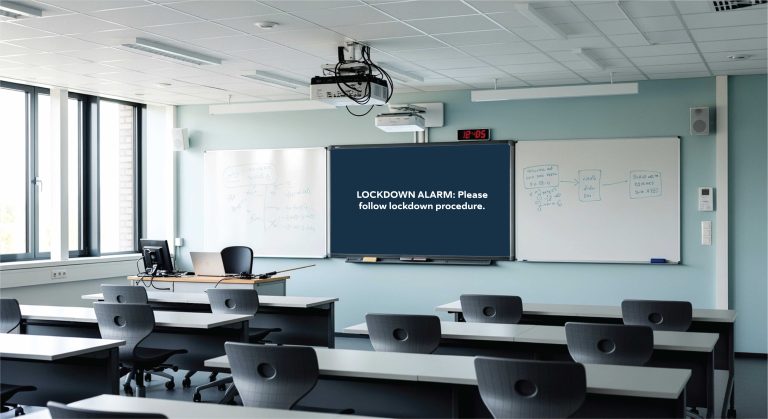
The hardest part in a shared building is telling everyone, across different companies and floors, the same thing at the same time. PopAlert displays a pre-written lockdown, invacuation, evacuation or All Clear instruction full screen on every connected computer, with a distinct tone. Administrators can send live updates, and multiple buildings or zones can be managed from one dashboard.
See PopAlert for offices and public venues, read our workplace invacuation guide, or book a demo.
This article is general information, not legal advice. Check the latest Home Office and SIA guidance for your building.