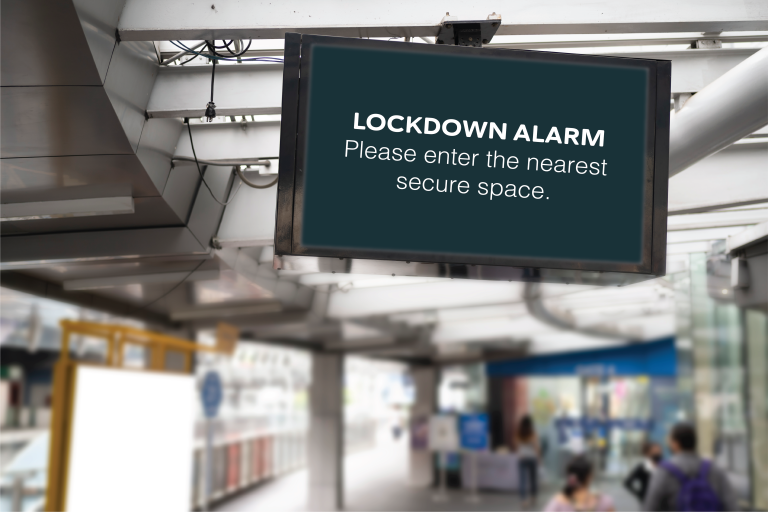
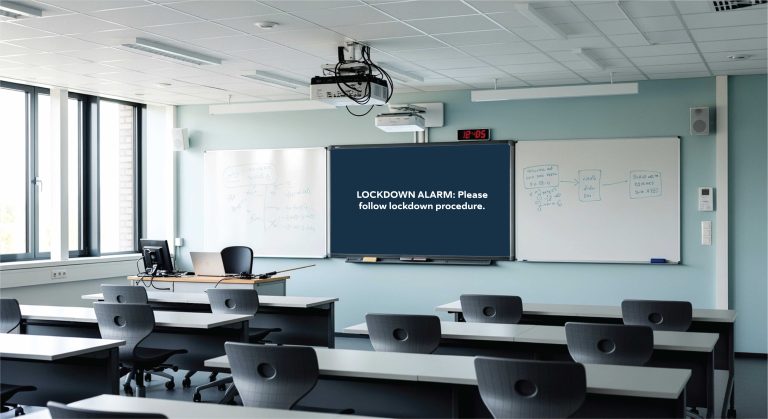
Every school knows how to run a fire drill. Far fewer have rehearsed a lockdown, yet a lockdown asks much more of staff: recognising the signal, securing rooms quickly, keeping pupils calm and quiet, and waiting for a genuine All Clear.
With Martyn’s Law requiring qualifying schools to have documented lockdown, invacuation, evacuation and communication procedures by 2027, now is a good time to put your plan to the test. This guide takes you through planning, running and reviewing a lockdown drill.
Why Lockdown Drills Matter
A lockdown procedure only works if people act on it immediately and correctly. Drills reveal the problems that never show up on paper: an alert that can’t be heard in the sports hall, a classroom door that won’t lock, or staff who aren’t sure who can call the All Clear.
The Department for Education’s Protective security and preparedness for education settings guidance recommends that schools have lockdown, invacuation and evacuation plans, train staff on them, and test them. Under Martyn’s Law, the standard tier also requires staff to know these procedures.
Step 1: Plan the Drill
- Set a clear objective. For example: “every room secured within three minutes of the alert”, or “test whether the alert reaches the outbuildings”.
- Decide who takes part. DfE guidance notes that lockdown drills involving primary and early years pupils are relatively uncommon. Many settings run staff-only drills when young children are not present, then introduce pupil drills in an age-appropriate way.
- Choose the signal. It must be clearly different from the fire alarm, so nobody evacuates towards a threat.
- Brief observers. Place staff with a checklist in corridors, outbuildings and shared spaces to record timings and problems.
- Tell parents in advance if pupils are involved, and explain why you practise. Calm, matter-of-fact messaging helps.
Step 2: Raise the Alert
Start the drill using the same method you would use in a real incident, and say clearly that it is a drill. Note the time. Your observers should record:
- how long it took each area to receive the alert;
- whether anyone was unsure what the signal meant;
- any area that did not receive it at all, such as toilets, the field, kitchens or the music block.
Step 3: Secure the Rooms
Staff should follow your lockdown procedure. Typical actions include:
- bringing pupils from corridors and nearby spaces into the nearest secure room;
- locking or securing doors and closing windows;
- closing blinds and turning off lights where appropriate;
- moving everyone away from doors and windows and out of sight;
- keeping pupils quiet and calm, and phones silent;
- taking a register of who is in the room, including pupils from other classes.
Note any rooms that can’t be secured properly. These become actions for your site team.
Step 4: Communicate During the Lockdown
Real incidents change minute by minute, so your plan should include how updates reach every room. Use the drill to test this: send at least one update, such as “remain in lockdown, further information to follow”, and check it reached everyone.
Also test how staff report back. For example, how does a room tell the office it has a missing pupil or an extra visitor?
Step 5: Give the All Clear
The All Clear is easy to overlook. It should come only from an authorised person and in a form staff trust, so a knock on the door or a rumour cannot end a lockdown early. Agree in advance how the All Clear is given and confirmed, and make sure every area receives it.
Step 6: Debrief and Improve
Hold a short debrief the same day while memories are fresh. Useful questions:
- How long did it take for every area to receive the alert?
- Was anyone unsure whether it was a lockdown, an invacuation or a fire alarm?
- Which rooms or spaces were hard to secure?
- Were pupils outside classrooms found and brought to safety?
- Did updates and the All Clear reach everyone?
- What will we change before the next drill?
Record the outcome and actions. This evidence also shows governors, trust boards and inspectors that your procedures are tested, not just written down.
Lockdown, Invacuation and Evacuation Drills
Once a basic lockdown drill runs smoothly, practise the other procedures too. An invacuation brings everyone inside when the danger is outside, and an evacuation moves everyone out. Staff need to recognise which one is being called. Our article on lockdown vs invacuation explains the difference.
Vary the timing of drills, for example during break, lunch or lesson changeovers. Incidents rarely happen when everyone is neatly seated in class.
Common Problems Drills Uncover
- The alert can’t be heard everywhere, especially in sports halls, workshops and outbuildings.
- The signal is confused with the fire alarm, and people head outside.
- Staff improvise messages under pressure, so different rooms hear different things.
- Nobody is sure who can give the All Clear, or how.
- Pupils outside classrooms are missed.
How PopAlert Helps with Lockdown Drills
PopAlert displays pre-written lockdown, invacuation, evacuation and All Clear instructions full screen on every connected computer at the same time, with a distinct alert tone chosen from 32 built-in sirens so it can’t be mistaken for the fire alarm. Administrators can send live updates during the drill. Scheduled test alerts and drill mode let you practise regularly without confusion.
See how it works for schools and colleges, read what Martyn’s Law means for schools, or book a demo.