Every workplace has a fire evacuation plan. Far fewer have thought about the reverse: what to do when it is safer to be inside than outside. That procedure is called invacuation, and it is now one of the four procedures that premises in scope of Martyn’s Law need to have in place.
What Does Invacuation Mean?
Invacuation is the controlled movement of people from outside, or from exposed areas, into a safe place inside a building. It is used when the danger is outside and staying outdoors would put people at greater risk.
Typical reasons include a violent or suspicious incident nearby, a hazardous substance or smoke release in the area, or severe weather.
Invacuation vs Lockdown vs Evacuation
- Evacuation: the danger is inside, so everyone leaves the building.
- Invacuation: the danger is outside, so everyone comes in and stays in.
- Lockdown: the threat is at or inside the building, so people secure themselves in rooms and stay out of sight.
An invacuation can turn into a lockdown if the threat gets closer, which is why staff need to recognise each instruction instantly. Our article on lockdown vs invacuation goes into more detail.
When Would an Office Invacuate?
Offices and workplaces don’t only face risks inside the building. Consider staff on a smoking break, people arriving at reception, delivery drivers in the yard, or visitors crossing a car park. If something happens in the street outside, you need a fast way to bring those people in, and to stop others from walking out into danger.
How to Plan an Invacuation Procedure
- Identify safe areas inside the building, away from glass frontages and entrances, with enough room for staff and visitors.
- Decide who can trigger it and how. Reception and security staff often see an outside incident first.
- Plan how people outside will be told, including those in car parks, yards and smoking areas.
- Control the entrances: who closes doors, and when it is safe to let late arrivals in.
- Account for people, including visitors and contractors, using sign-in records.
- Plan communication during the incident and a clear, authorised All Clear.
- Train staff and practise alongside your fire evacuation drills.
The Communication Challenge
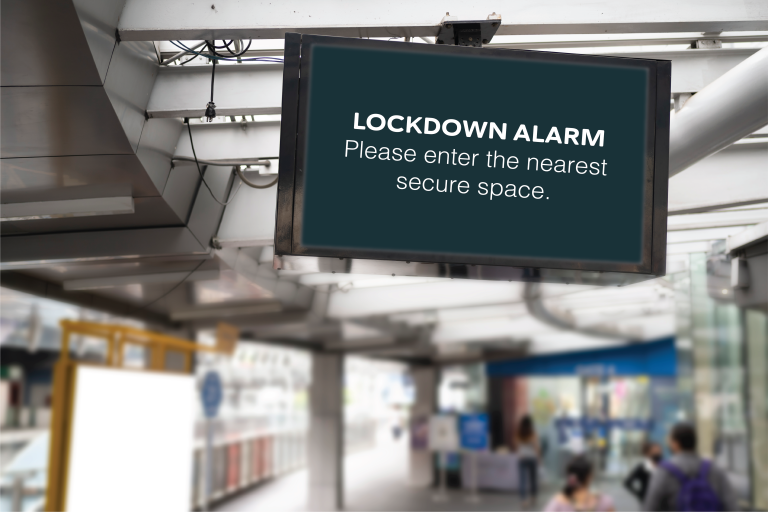
The hardest part of an invacuation is telling everyone at once that they must not go outside, at the moment when their instinct, trained by fire drills, is to head for the exit. Emails and messaging apps are easy to miss, and a tannoy may not reach every floor. Your procedure should say exactly how the instruction reaches every desk, meeting room and communal area within seconds.
Invacuation and Martyn’s Law
Martyn’s Law requires qualifying premises (generally publicly accessible buildings expected to hold 200 or more people) to have procedures for evacuation, invacuation, lockdown and communication. Not every office is in scope, but those with publicly accessible areas may be, and the procedure is good practice for every employer. Read our Martyn’s Law overview for more.
How PopAlert Supports Workplace Invacuation
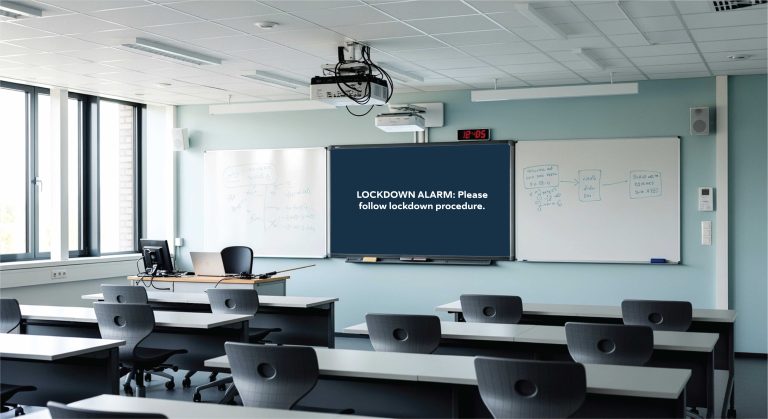
With PopAlert, an authorised member of staff triggers a pre-written invacuation alert and it appears full screen on every connected computer across the building, with a distinct tone and clear instructions such as “Do not leave the building. Move away from the windows and await further instructions.” Administrators can send live updates, then issue the All Clear.
Find out more about PopAlert for offices or book a demo.