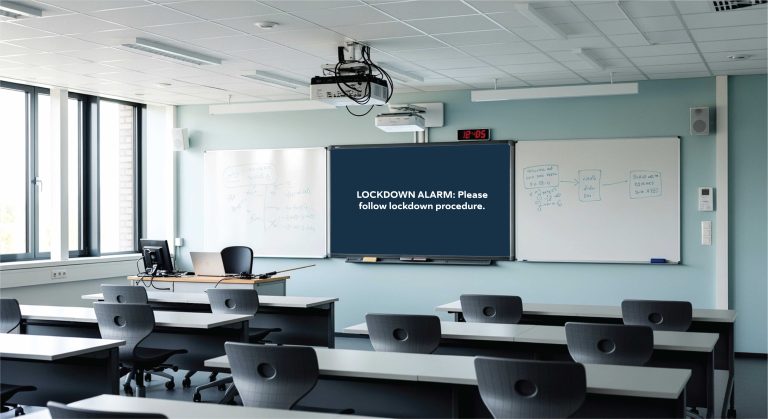
Schools have several emergency procedures designed to protect staff and students during different types of incidents. Two terms that are often confused are lockdown and invacuation. While both involve keeping people inside buildings, they are used for very different situations.
Understanding the difference between these procedures helps schools respond quickly and ensures staff follow the correct actions during emergencies.
Schools reviewing their safety procedures may also be considering Martyn’s Law and the Protect Duty, which encourages organisations to plan how they would respond to security incidents.A lockdown is used when a threat is inside the building or very close to the school site.
During a lockdown, classrooms are secured and students remain inside until the situation is resolved.
Typical lockdown actions include securing doors, moving students away from windows, remaining silent, and waiting for instructions from school leadership or emergency services.

An invacuation is used when there is a danger outside the school grounds, requiring everyone to move indoors quickly.
This could include situations such as a dangerous person nearby, severe weather, or an incident in the surrounding area.
During an invacuation, students and staff move inside the building and remain indoors until the situation is safe.

Evacuation procedures are more familiar to schools and are commonly practiced during fire drills.
During an evacuation, students and staff leave the building and move to designated assembly points outside.
The key difference is that evacuation moves people out of the building, while invacuation brings people into the building for safety.

In emergency situations, confusion can lead to delays and uncertainty. Schools benefit from clearly defined procedures that staff can follow without hesitation.
When staff understand the difference between lockdown, invacuation, and evacuation, they are able to respond quickly and help maintain calm among students.
Regular training and drills help ensure everyone knows what to do in each situation.
Clear communication is one of the most important elements during any emergency procedure.
Some schools are now exploring systems such as PopAlert for schools, which allow authorised staff to trigger emergency alerts instantly across classroom computers.
Staff across the school must receive the same instructions at the same time so that everyone can respond consistently.
Many schools are now exploring internal alert systems that allow authorised staff to trigger emergency instructions instantly across classrooms and staff devices.
These systems help ensure instructions such as lockdown or invacuation are delivered clearly and immediately.
As schools review their safety procedures, many are considering how technology can support faster communication during incidents.
Solutions such as PopAlert allow authorised staff to trigger emergency alerts that appear instantly across classroom computers, ensuring instructions are delivered consistently throughout the site.
This helps schools respond quickly while improving coordination during emergency situations.
Schools that want to strengthen their preparedness can also read our guide on How Schools Can Prepare for Martyn’s Law in 2026, which explains how schools can review their emergency planning.