Emergency Communication Built for
Corporate Offices Shared Workspaces Operational Offices Client-Facing Offices
Designed for modern workplaces where clarity and rapid response are critical.
Why Emergency Communication Matters in Offices
Office environments range from small teams to large, multi-floor buildings. During an incident, traditional communication methods often fail to deliver clear, actionable guidance to everyone at the same time.
Fire alarms don’t explain what to do
Alarms signal danger but provide no instruction on the correct response.
Tannoy systems are unclear or missed
Audio announcements are often lost in busy corridors and large spaces.
Different audiences need different guidance
Employees, contractors, and visitors require different levels of guidance.
Large workplaces are difficult to coordinate
Multiple buildings make consistent communication challenging.
Information becomes inconsistent
In busy office environments, communication can quickly become inconsistent without one clear system.
A Clear, Unified Emergency Communication System for Workplaces
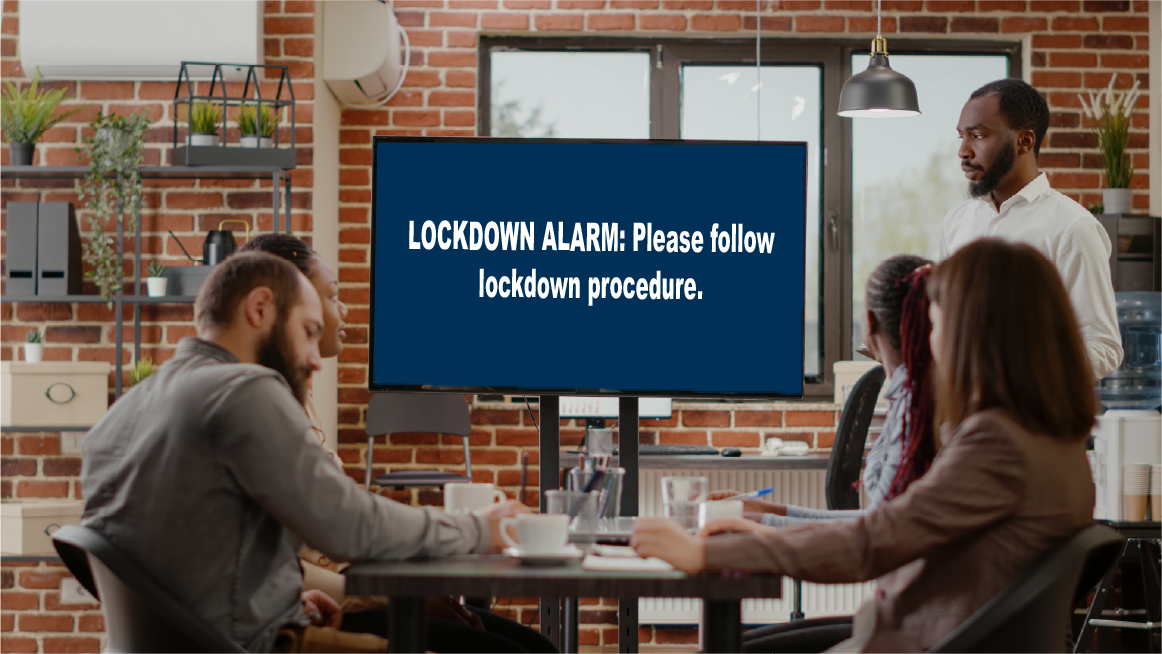
PopAlert is designed for modern workplaces where clarity, speed, and calm communication are essential. It provides a consistent way to deliver clear on-screen instructions across offices, meeting rooms, and shared spaces.
Clear Visual Instructions
Full-screen alerts appear instantly on connected computers, ensuring messages are seen, not missed.
Purpose-Built for Offices
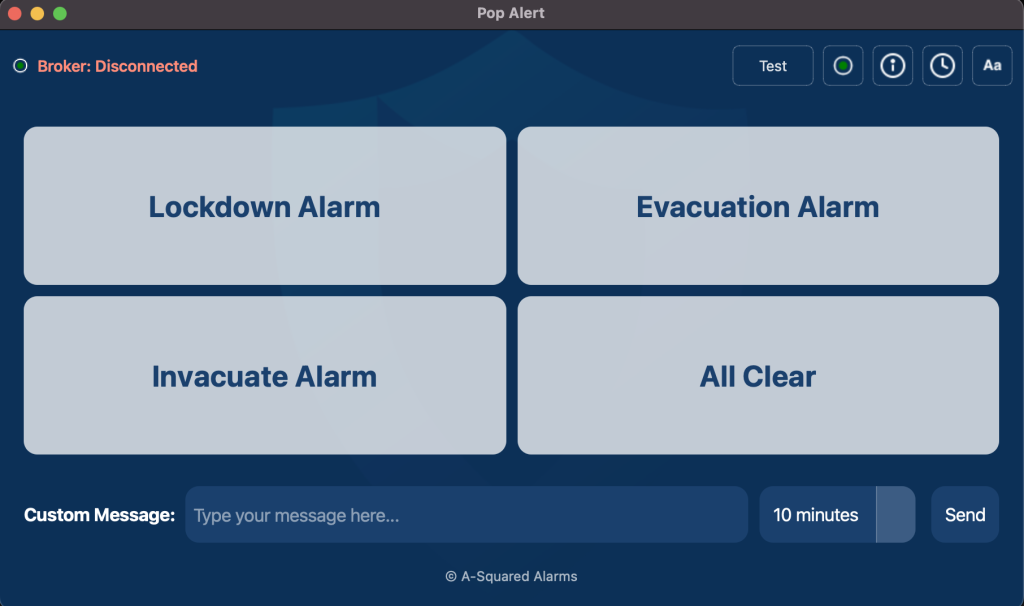
Pre-defined alerts for lockdown, evacuation, shelter-in-place, and drills, tailored for workplace procedures and operational teams.
Consistent Messaging Across Sites
The same instruction reaches employees and visitors at the same time, reducing confusion and misinformation.
Works Alongside Existing Systems
PopAlert complements fire alarms, lockdown alarms,
and access control systems, it doesn’t replace them.
Three Critical Incidents Every Office Must Be Prepared For
PopAlert provides clear, pre-defined instructions for the most common and high-risk situations faced by office environments.
- LOCKDOWN
- EVACUATION
- INVACUATION
- LOCKDOWN
- EVACUATION
- INVACUATION
Why Traditional Methods Aren’t Always Enough
Emergency communication systems like PA announcements, emails, or sirens each serve a purpose — but they often lack clarity, consistency, or guaranteed visibility.
PopAlert was designed to close those gaps.
| Feature/Method | PopAlert | PA System | Email/Sms | Siren/Bell | Phone Tree |
|---|---|---|---|---|---|
| Full-screen visual alert | Yes | No | No | No | No |
| Clear written instructions | Yes | Audio Only | May be Unread | No | Verbal Only |
| Instant 0rganization-wide delivery | Yes | Depends on audibility | Delays Possible | Signal Only | Slow |
| Works in noisy enviroments | Yes | Can be missed | Depends | Can cause confusion | Slow |
| Reduces interpretation error | Yes | Tone dependent | May be ignored | No contact | Human error |
| Drill and logging capability | Yes | Limited | Limited | None | None |
| Complements existing system | Yes | - | - | - | - |
Supporting Duty of Care Across Workspaces
- Supports safeguarding and emergency preparedness policies
- Complements fire alarms, lockdown systems, and access control
- Helps demonstrate a structured approach to emergency communication
- Reduces confusion during high-stress incidents